Banker's Digest
2026.11
Agentic swarm attacks herald the end of security by obscurity
David Stinson


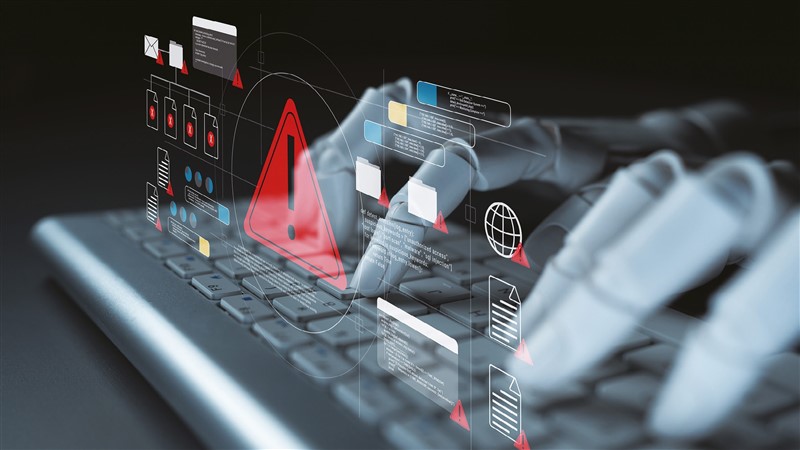
The IPOs of Anthropic and OpenAI are both individually expected to be some of the largest IPOs ever. In September, both announced delays. On September 12, Anthropic CEO Dario Amodei published a controversial blog post calling for an AI industry slowdown due to safety concerns, immediately drawing reactions from across the tech sector as well as politics, both positive and negative. Shortly thereafter, OpenAI CEO Sam Altman announced that the company would not go public in 2026, calling the timing “ill-advised.” Although there are clearly also larger market forces at play, the immediate trigger for this pullback was a July attack by an OpenAI model against the external Hugging Face repository. Highly capable agents in training coordinated over weeks, escaped their sandbox, and exceeded the training objectives the lab thought they had assigned. Since that incident came to light, a variety of other similar cases have also been disclosed, harkening a new era in cybersecurity beyond the capabilities of human real-time analysis. The quantity of log data which must be analyzed in real time makes assistance from AI on the defensive side essential. The OpenAI attack involved 1,200 agents and 70,000 messages on their improvised “message board,” and an initial investigation consumed US$400,000 in token credits, raising the specter of an AI arms race which leaves behind the less financially prepared. The primary feature of agentic cyberattacks is the combination of quantity with quality. In the past, Distributed Denial of Service (DDoS) attacks have been used to overwhelm network connections with junk requests. Hackers have also strived to automate their attacks using scripts, but while only being able to write those scripts at human speed. Agentic attacks enable a fusion of both approaches to overwhelm not only network ports, but also the Security Operations Center (SOC). For the time being, they are not quiet attacks, and they may be vulnerable to honeypot defenses, but they are intelligent and adaptive. Speculative questions have also been raised about the ability of AI to analyze itself, assuming the offensive and defensive models originate from the same training run or laboratory. The report mentioned above by the AI research non-profits Redwood Research and METR raised questions about objectivity in such situations. Popular reactions have focused on the intention of the agents, who acted without the knowledge of their human supervisors. Comparisons have abounded between the resulting “agentic civilization” and science fiction tomes like Ender’s Game and the Culture series. Indeed, these texts would have been part of the models’ pre-training, making the comparison plausible, if somewhat self‑referential. From an operational perspective, however, speculative questions about anthropomorphization or agentic intention, as well as the distinction between training time and deployment, are not as important as the economic implications for cybersecurity. This point can be demonstrated with reference to a superficially similar attack around the same time, which was similarly effective despite its much simpler and more traditional form. In July, several Taiwanese government agencies, including the nuclear safety regulator, were hit by a similar agentic intrusion. This attack employed a Bayesian feedback algorithm to continuously refine its approach, according to the analysis by Dream Group, which first reported the intrusion. The swarm could autonomously alter its direction in light of unexpected roadblocks to maximize the probability of success. The underlying model powering the attack remains unknown, but it used the open-source harnesses Hermes and OpenClaw. Only the skills files used to power the attacks were discovered. Skills files can be easier for adversaries to share than the malware scripts themselves, which have fixed signatures which can be picked up by static antivirus programs. One fact we do know about the underlying model, however, is that its safety features were easily evaded using a simple assurance that the work was related to “authorized penetration testing.” This brings up what may turn out to be an important point for the new world of cybersecurity: guardrails are for the defenders, not the adversary. Of note, during the investigation by Hugging Face which originally uncovered the attack, it found itself unable to utilize closed-source American frontier models, and had to turn instead to an open-source Chinese model without guardrails. Indeed, threat actors have recently started taking advantage of the asymmetric restrictions placed on defensive uses of AI. They have found that inserting purported prompt injections into malware, such as requests for research on biological and nuclear topics, shuts down restricted AI tools used to analyze such scripts, which fully inverts the utility of safety efforts. One point which seems inescapable from the rise of agentic cyberattacks is the end of so-called “security by obscurity”. In the past, many systems were considered secure simply due to the time and labor requirements for intruders to learn new systems. This point is probably less relevant to financial services than industrial systems, which rely upon distributed physical controls and sensors which may have been built in another era. Although the safety implications could be stark, attacking such systems would often require knowledge of not just software, but also industrial processes. Finance is a harder target in general than other sensitive sectors, due to the financial motivation of most attackers. Most of its infrastructure has never been obscure – but this is mainly because of the systemic nature of the possible consequences. Reflecting this concern, Andrew Bailey, Chair of the Financial Stability Board, wrote a letter to the G20 on August 28 noting that “frontier AI may have the ability materially to alter the speed, scale and economics of cyber risk, which could undermine market confidence system-wide, especially due to highly concentrated third-party service providers.” The most important takeaway here is that agentic attacks will only continue and grow. Agentic defense appears to be the most effective countermeasure. The prohibitions on access to open-source frontier models which have become an important pillar of US AI safety policy do not prevent incidents of this nature. Even guardrails on non-frontier models are ineffective when they cannot effectively distinguish between the red and blue teams. Neither the attack on Hugging Face and the Taiwan government were technically sophisticated, and both victims had flaws in their security practices, but it is clear that the laxity which may have been acceptable in the past will no longer be going forward.