Banker's Digest
2026.08
The American AI race moves from Silicon Valley to local neighborhoods
By David Stinson


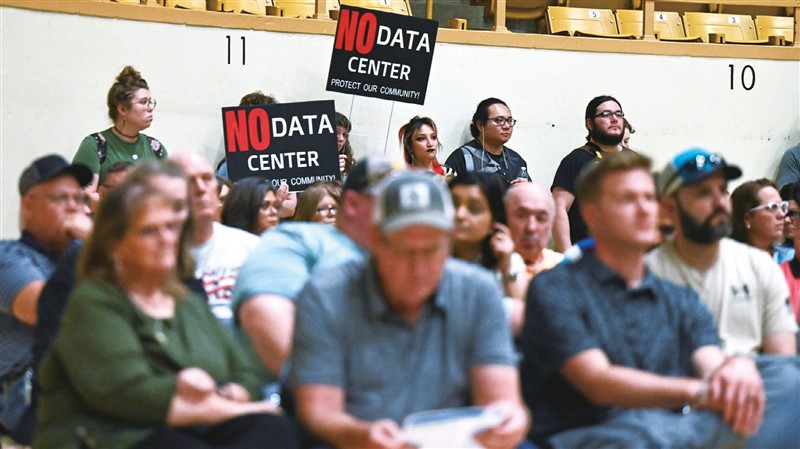
The late 19th century was termed the “gilded age” in the US. The rapid growth of the railway industry at the time helped establish the legacy of New York as a financial center – and also gave rise to “robber barons” with disproportionate influence whose political influence challenged the financial sovereignty of the state itself. Responses to the excesses of the railroads came in two flavors – largely exclusive groups who nevertheless shared many of the same aims. The progressives were the urban, industrial coalition, while the Populist Party had a rural base spanning both the former southern Confederacy and northern states which had just recently gone to war. The progressives found the populists overly crass and conspiratorial, but eventually synthesized many of their grievances into the creation of the Federal Reserve in 1913. American journalists have termed the current era a “second gilded age,” pointing to exploding inequality and anti-immigration sentiment, tariffs, and more recently the gilded Trumpian aesthetics on display around Washington D.C. Today, it is the mad dash to build out AI infrastructure which is sustaining the American economy amid otherwise deteriorating fundamentals, creating a single-industry dependence which arguably has not been seen since that era. Similarly, AI regulation advocacy and opposition is splitting into parallel urban and rural tracks – often pointing to related issues, but applying different language and tactics. While Silicon Valley debates high-level issues like the race with China, this rural track is concerned singularly with the construction of data centers – an industry which now spends $50 billion annually, exceeding spending on traditional office construction. The ongoing buildout has rapidly emerged as a salient political topic, transcending partisan boundaries. A May survey from the polling firm Gallup found that 48% of Americans who responded would strongly oppose the construction of a data center in their area, compared to just 7% who would strongly favor it. It is becoming a point of bipartisan unity. While originally a position of outspoken leftist politicians like Bernie Sanders and Alexandria Ocasio-Ortiz, who recently introduced federal legislation to restrict data center construction, conservative state governors are rapidly taking up opposition as well. In May, for instance, Florida Governor Ron DeSantis signed a “law to protect Floridians from subsidizing data centers,” according to a press release from his office – even as earlier tax breaks remain in effect. In June, Texas Governor Greg Abbott called for a wholesale ban on data centers in rural areas. The most immediate trigger for this increase in skepticism is resource scarcity. Data centers compete for electricity on the same power grids as residential users, tangibly increasing household expenses. While some data centers are willing to generate their own power, they almost always still require grid interconnection, which involves multi-year queues. This is the same factor which has prompted SpaceX to contemplate space-based data centers; its June IPO was the largest in history, valued at US$ 1.77 trillion. This nexus with energy policy was what originally allowed pre-existing (left-leaning) environmental activism networks to immediately plug into the new cause – such as opponents to fracking, as well as the Keystone XL oil pipeline. Erin Brokovich, the successful activist portrayed in a 2000 film of the same name by Julia Roberts, has recently focused her attention on this topic. Energy constraints also play into other issues of local concern. Water supply requirements for heat transfer have captured the public imagination, even though server farms are not a major consumer overall when compared to agriculture. The problem frequently lies in the confluence with solar power. The arid Southwestern states of Texas, Arizona, and Nevada have an excellent environment for solar power, but their strong data center construction has come at the expense of their water tables. Besides these direct impacts, the Gallup poll also revealed several more abstract concerns among those who opposed data centers. 27% of this subset mentioned various concerns with AI in general, from disliking it overall to more specific safety topics. These concerns represent the national debate being distilled down the local level; blocking physical construction would not affect any of it, but the local aspects of the buildout create a checkpoint for democratic participation. This figure is less than the 50% concerned about resources, and can be compared with a further 22% concerned about quality of life, 20% on cost, and 16% about pollution – but it is notable for being ideological rather than practical in nature. Besides these negative views of AI and specific AI concerns, a further 14% were concerned about the negative economic effects of AI, such as job loss. This brings the total who mentioned more big-picture items to 41% – but it is economics where the connections between the national and local narratives start to become into sharper focus. (Anecdotally, much of the economic opposition is less about AI in general and also more about attitudes towards tech industry leaders specifically, although the poll did not ask about that topic.) The previous industrial model for local governments would have been to encourage major manufacturers to set up plants, with the expectation of long-term job creation which would drive local development. Data centers create construction jobs, on the other hand, but otherwise most of the economic benefits go to remote system administrators, overseas hardware manufacturers, or simply Wall Street. The cost-benefit equation for municipalities still tends to be favorable, but in a purely financial sense which pits representatives against their constituents. This dynamic underpins the increasing accusations of non-transparency: when approvals do occur, they tend to be motivated by finances more than popularity. Some adjustment may be needed in the rural social contract, encouraging voters to understand that job creation is not the main benefit expected from an industrial project in the first place. It also worth noting that some apparent sentiment against data centers might also reflect the excessive financial incentives previously dangled in front of traditional manufacturers. Data centers lack geographic options, and therefore cannot play different localities against each other in the same way that factory operators have. Some red states are only starting to realize their bargaining power, when they have otherwise been inclined toward tax breaks as a tool of industrial policy. The railroads created a genuine monopoly situation when they passed through small towns. Residents demanded local fares, challenging the corporate tycoons, and eventually creating the Interstate Commerce Commission, the first federal regulatory agency. The political parallels with data centers are precise, but the economics are not: there is no obvious, major market failure at the expense of their neighbors. The electrical grid is the clearest example of a need for new regulatory paradigms. In part, the failures in the interconnection system reflect a need for physical infrastructure which can respond on the millisecond level to the changing supply conditions of intermittent energy sources – but the problems also include administrative and market structure dimensions. Interconnection queues need a way to rank projects by priority, as well as tolerance for occasional intermittency. Nevertheless, the political backlash also appears broader than just this relatively technical area. The deeper issue appears to be the same identity crisis which has prompted fears of “de-industrialization,” culminating earlier in the trade war. Data centers provide the desired re-industrialization, but it does not necessarily take the form expected – such as increasing the trade balance. Many observers understand the current moment as NIMBYism (an acronym for “not in my backyard”), or a form of economic rent-seeking. It does not need to be that way. The game-theoretic optimal way to bargain would not be over fixed resources, such as adopting dual pricing models for electricity which insulate residential users from market demand, but rather over the potential upside gains of AI, helping align incentives. Suppose data centers offered token budgets to municipalities which facilitated their construction? This may not be a practical strategy in the current moment, but as a thought experiment, it can help focus the discussion on how rural areas can reposition their value proposition in light of AI. This will likely mean differentiation. Some might use these tokens to create agri-tech resources for common use. Others might give their tokens away for direct use by residents, highlighting their quality of life to attract remote workers. None of these strategies will work by momentum alone, but opportunities do exist for governments willing to take the initiative. Others areas, not blessed by geographic conditions including water resources and green energy availability, meanwhile, may find themselves shut out of the new economy altogether. They should not consider themselves lucky just for having avoided disruption from new construction.