Banker's Digest
2026.07
NDC mobilizes private capital to finance Taiwan's trillion-NTD agenda
Su Wei-hua


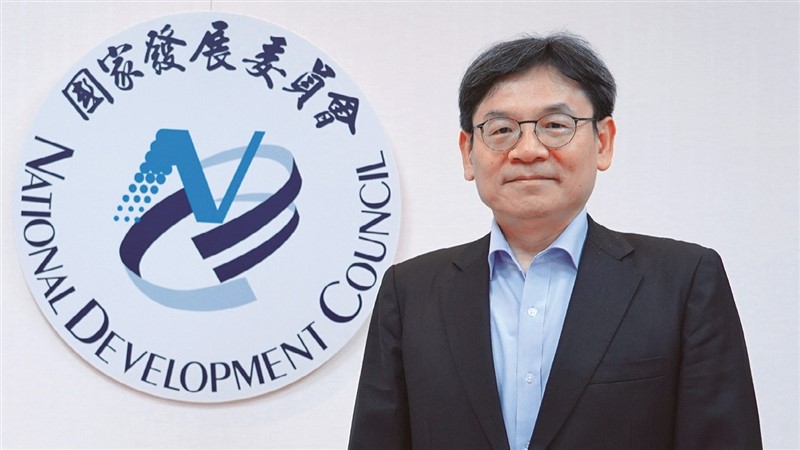
Taiwan’s economy is experiencing an unusual combination of overheating and underutilization. In an exclusive interview with The Taiwan Banker, National Development Council (NDC) Minister Paul Liu observed, “People used to say that Taiwan was awash with money, but today’s influx of capital is even more remarkable.” On one hand, the global AI boom is driving exports and investment at full speed, pushing growth to exceptional levels. On the other, abundant domestic capital remains constrained by a lack of stable, investable real-economy assets, leaving considerable room for greater private-sector participation in national development. According to the Directorate-General of Budget, Accounting and Statistics (DGBAS), Taiwan's current account surplus is continuing to expand rapidly. Excess savings are expected to surpass NT$9 trillion for the first time this year, while the excess savings ratio is projected to reach a record 26.96%, both historic highs. To Liu, this capital represents both a challenge and an opportunity. The government's objective is to channel private capital toward strategic industries and public infrastructure that support the real economy. To achieve this, the NDC has launched two flagship initiatives, which jointly aim to transform Taiwan’s savings into investments to support the ten major AI infrastructure projects and broader development of the AI industry: the trillion-NTD investment for national development program and NT$100 billion innovation acceleration program. The transformation extends well beyond public investment. Through regulatory reform, innovative public-private partnership (PPP) platforms, and an expanded ecosystem for global talent, Taiwan’s financial sector is evolving from a traditional financing provider into a strategic partner in national transformation, helping redefine the country’s competitiveness and financial strength over the coming decade. Liu noted that this AI-driven investment wave is even larger than previous economic cycles. To avoid repeating past episodes in which excess liquidity flowed into speculative assets such as real estate and equities, the government has coordinated efforts across ministries, including the Ministry of Finance, Ministry of Economic Affairs, Ministry of Environment, Ministry of Digital Affairs (MODA), Financial Supervisory Commission (FSC), and NDC, to create a broader range of productive investment opportunities. A key breakthrough has been the FSC's comprehensive regulatory reforms, which create stronger incentives for insurers to invest in private equity funds dedicated to public infrastructure. The reforms are designed to encourage insurers and other institutional investors to participate indirectly in the ten major AI infrastructure projects and Taiwan’s 13 strategic industries through private equity. From urban renewal and green infrastructure to AI computing centers, the government is using institutional design to enable private capital to participate in national development while maintaining appropriate risk controls and attractive long-term returns. Liu explained that Taiwan's government has frequently had public infrastructure projects requiring investment, while the private sector possessed abundant capital, yet without effective mechanisms to connect the two. Despite managing enormous pools of long-term capital, Taiwan’s life insurers have struggled to identify infrastructure assets that match their long-duration liabilities. As a result, significant amounts of capital have instead flowed overseas into investments such as U.S. Treasury securities. The Trillion-NTD Investment for National Development Program aims to better match infrastructure projects with long-term capital. It rests on three strategic pillars: innovative PPP mechanisms, improved financing conditions, and more financial products. Its most significant institutional innovation is the creation of a high-level Executive Yuan project platform for transparent and stable policy coordination. The platform is jointly led by the Secretary-General of the Executive Yuan, Minister of the NDC, and Minister of Finance, elevating decision-making to the Cabinet level. Working groups dedicated to PPP promotion and regulatory reform bring together government officials, technical experts, and leading academics to efficiently resolve regulatory and administrative issues. Equally important, Taiwan's approach to infrastructure planning is shifting from a government-led model toward genuine public-private collaboration. Industry associations including the Bankers Association of the Republic of China and the Taiwan Financial Services Roundtable regularly collect proposals from financial institutions and submit investment recommendations, while the government identifies projects capable of generating stable long-term returns. Quarterly PPP matching sessions then connect suitable projects with interested private investors. Once approved through the platform, projects become immediately available for private participation, creating a closer partnership between government and industry. Because risk management lies at the heart of the insurance industry, insurers have historically been constrained by stringent risk-based capital (RBC) requirements and investment limits, reducing their incentive to participate in national infrastructure projects. To address this issue, the NDC and FSC have jointly introduced sweeping regulatory reforms. The new framework reduces the RBC risk factor for insurers investing in public infrastructure private equity (PE) and venture capital (VC) funds dramatically from 10.18% to just 1.28%. According to Liu, this new PPP framework has already produced tangible results. Taiwan's first landmark AI computing center PPP project has now entered implementation. Following the formal definition of AI computing centers as eligible public infrastructure by MODA, technology companies have already submitted project proposals, with contracts expected to be signed before the end of the year. The project will adopt a build-own-operate model, enabling private investors to retain ownership while assuming commercial responsibility. The platform demonstrates how digital infrastructure can successfully combine public policy objectives with private-sector investment. Insurers participating in projects will benefit from the preferential 1.28% RBC treatment while also qualifying for investment limits of up to 45%. AI computing centers represent only the beginning. The NDC will continue working with government agencies and financial institutions within the framework of the ten major AI infrastructure projects, five trusted industries, and the 13 strategic industries to identify emerging technology projects possessing public infrastructure characteristics. Qualifying investments may include low-carbon green data centers and AI-enabled smart applications. The government aims to channel Taiwan's excess savings into these sectors through additional regulatory guidance. Alongside the trillion-NTD investment initiative, the NDC has also launched a NT$100 billion innovation acceleration program, designed to connect government funding directly with Taiwan's startup ecosystem. The inaugural Startup Alliance Competition, which concluded at the end of May, marked the program’s first major milestone. Rather than relying on the traditional grant model of collecting applications and evaluating them, the competition introduced an entrepreneurial development framework closely integrated with capital markets. The response was overwhelming, attracting 2,805 teams from across Taiwan. Liu explained that the program emphasizes long-term capability building rather than simply awarding prize money. “We first help entrepreneurs develop real capabilities,” he said. “Only after they are ready do we help them enter the capital market.” Applicants first completed 25 hours of entrepreneurship training, from which 300 teams advanced. These teams then participated in two-day hackathons held in four regions across Taiwan, receiving one-on-one mentoring from 60 industry experts before the field was narrowed to 30 finalists. The top three each became eligible for startup funding of up to NT$10 million, distributed based on milestone achievements. Throughout the competition, the Taipei Exchange (TPEx) also participated by identifying promising startups for future access to Taiwan's multi-tier capital markets. Liu highlighted two notable findings from the nine-month competition. First, participation from outside Taiwan's six special municipalities was exceptionally strong, accounting for nearly 30% of all applicants, a proportion closely matching Taiwan's population distribution – demonstrating that entrepreneurial talent extends well beyond Taipei. Second, more than half of participating teams had not yet formally established companies. Many originated from research laboratories or technology firms, suggesting that the competition successfully encouraged aspiring entrepreneurs to transform ideas into startups. Next, the NDC plans to establish a startup alliance to maintain long-term support for participating teams, with future plans to organize an industry association to promote mentorship between established entrepreneurs and new founders. The projects themselves also demonstrated Taiwan’s growing strengths in specialized AI applications. Rather than focusing on general-purpose AI, many participants targeted vertical industries, including AI-assisted minimally invasive surgical suturing systems capable of reducing operating time by half, as well as low-Earth orbit satellite signal-switching technologies serving the global space supply chain. Taiwan's ambitions also extend well beyond its domestic market. The NDC has already established overseas startup hubs in leading global technology centers, including Tokyo and Silicon Valley, connecting Taiwanese startups directly with international capital markets and innovation ecosystems. These overseas bases will continue helping Taiwan’s most promising companies, including those specializing in vertical AI applications and green technologies, expand internationally. “Taiwan is known around the world for its semiconductors,” Liu said. “But we want the world to recognize that Taiwan's innovation ecosystem is much broader than that.” By successfully redirecting more than NT$9 trillion in excess domestic savings toward productive investment, the government aims to inject fresh momentum into Taiwan’s economic transformation. As the country develops a workforce of 400,000 AI professionals while strategically deploying its NT$100 billion innovation fund, Taiwan is seeking to break with its past, redirecting capital away from speculative asset bubbles and toward productive innovation. Riding this historic wave of investment, Taiwan hopes to establish itself not only as a global technology powerhouse, but also as an indispensable source of innovation in the new era of AI. The author is Editor-in-Chief of The Taiwan Banker.