Banker's Digest
2026.06
Latin America is calling: an interview with the Director-General of the Department of Latin American and Caribbean Affairs, MOFA
Su Wei-hua


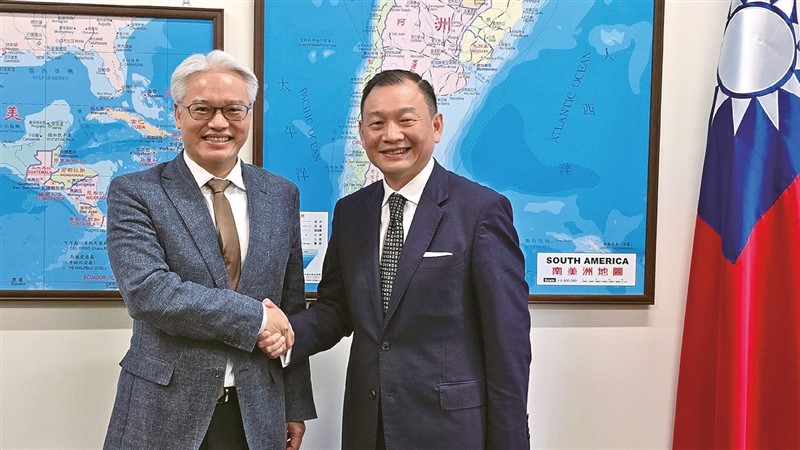
“Can Taiwan’s abundant capital really be directed to Latin America?” Despite its ample liquidity and exceptionally high savings rate, Taiwan’s Ministry of Foreign Affairs (MOFA) has traditionally been less familiar with financial instruments such as investment funds and bond markets. While Taiwan is awash with low-cost capital, lending rates in Paraguay have reached the double digits, and small and medium-sized enterprises (SMEs) in several Latin American countries face financing costs of 20% or more. This striking contrast represents a missed opportunity for Taiwan's financial sector, says José Chih-cheng Han, Director-General of MOFA’S Department of Latin American and Caribbean Affairs, during an interview with the Taiwan Banker. Han said that with appropriate risk management, Taiwan’s low-cost capital could be channeled into Latin America to generate genuine mutual benefit. As global supply chains continue to reorganize, Latin America’s strengths in natural resources and the energy transition are turning the region into an increasingly attractive investment destination. This backdrop brings renewed strategic significance to Taiwan’s nearly seventy-year diplomatic relationship with Paraguay. Han argues that future cooperation should move beyond traditional development lending toward an integrated ecosystem combining diplomacy with Taiwan’s technology and financial sectors. Language is often perceived as the greatest obstacle to doing business in Latin America. Spanish and Portuguese undoubtedly present challenges in commercial negotiations, contract reviews, and regulatory compliance. Drawing on years of diplomatic experience, however, Han argues that language is not the decisive barrier. Rather, what truly determines long-term business success is cultural understanding and shared values. Rooted in Christian traditions, Latin American societies place tremendous importance on family relationships and interpersonal trust – values which closely resemble Taiwan’s own emphasis on family integrity. While interpreters may suffice during initial negotiations conducted in English, deeper cooperation involving long-term partnerships and risk management depends on cultural affinity – an invisible, yet highly effective form of risk mitigation for financial institutions. Such shared values reduce information asymmetry and build the trust essential for successful international investment. Over the past several decades, Taiwan has successfully evolved its diplomatic engagement from one-way assistance into long-term technical cooperation through agricultural technology, financing by the International Cooperation and Development Fund (TaiwanICDF), and SME development programs. Civil society has reinforced these efforts through medical outreach programs organized by institutions such as Kaohsiung Medical University, the Lu Chu Foundation, and North American Taiwanese Medical Association. Together, these initiatives have built strong local relationships and social capital by delivering healthcare, agricultural assistance, education, and humanitarian support, creating a strong foundation for future financial cooperation. One notable example is the Taiwan-Paraguay Polytechnic University (UPTP), established in 2018 with support from National Taiwan University of Science and Technology at the request of MOFA. Offering instruction entirely in English, UPTP addresses Paraguay’s shortage of advanced technical talent by producing graduates in semiconductor engineering, computer science, civil engineering, and industrial engineering. With TABF’s 2026 signing of a Memorandum of Understanding with UPTP, bilateral cooperation has expanded beyond traditional development assistance into financial education and professional training. This partnership establishes a more systematic framework for financial talent development and industry-academia collaboration between Taiwan and Paraguay. Taiwan’s abundant domestic savings and persistent capital surplus have created a prolonged search for yield. Government bond yields have remained exceptionally low for a long period, making it increasingly difficult for banks and insurers to generate attractive returns. Latin America presents a markedly different picture. Even in countries with sound sovereign credit ratings and stable macroeconomic fundamentals, borrowing costs for businesses frequently exceed 10%, with some loans reaching 30%. This significant interest-rate differential creates substantial opportunities for cross-border capital allocation. With appropriate risk management frameworks, Taiwanese financial institutions could generate attractive, sustainable returns while simultaneously addressing Latin America’s business financing constraints. “Paraguay has been inviting us for years,” Han remarked, reflecting both the urgency and the opportunity he sees developing across the region. Paraguay’s vast flatlands, favorable climate, and abundant soybean and corn production provide a strong foundation for modern agribusiness. Traditionally dependent on commodity exports and cattle farming, the country is now actively promoting higher-value industries such as commercial pork production. Modern hog farming, Han noted, has become a highly sophisticated industrial operation requiring substantial investment in environmentally friendly facilities, automated feeding systems, and internationally certified processing plants – yet local financing costs remain prohibitively high. By combining financing with Taiwan's expertise in smart agriculture, Taiwanese financial institutions could support factory construction, equipment financing, and supply chain development. Such cooperation would help Paraguay move further up the agricultural value chain, creating jobs and expanding its exports to markets including the EU and Asia. Similar opportunities also exist throughout Taiwan's diplomatic partners in the Caribbean. Island nations such as Saint Kitts and Nevis and Saint Lucia enjoy relatively high per-capita incomes but remain heavily dependent on expensive fossil-fuel electricity due to geographic constraints. As global decarbonization accelerates, these countries urgently require renewable energy, smart grids, and energy storage infrastructure. Innovative financial structures could be used to export Taiwan’s expertise in renewable energy infrastructure, smart grid technology, and carbon reduction. Moreover, tourism-dependent island economies offer opportunities for blue carbon and green carbon projects that could be financed through sustainability-linked loans and green bond issuances. Such instruments would create new cross-border financing opportunities while helping partner countries achieve the UN Sustainable Development Goals. Han also emphasized the importance of multilateral development banks. By participating in syndicated financing led by multilateral development banks, Taiwanese financial institutions can effectively transform project exposure into credit exposure backed by highly rated international organizations. Such structures significantly reduce political risks including expropriation, nationalization, and foreign exchange restrictions, improving capital efficiency. Recent sovereign credit rating upgrades for Paraguay by Moody's and S&P Global have further strengthened the investment case. Investment-grade ratings reduce regulatory constraints on Taiwanese banks and insurers while lowering risk premiums for cross-border financing. These developments create favorable conditions for Taiwanese capital to participate in infrastructure, renewable energy, and green data center projects throughout Latin America under multilateral financing frameworks. Looking ahead, Han says that Taiwan's engagement with Latin America must evolve into an integrated ecosystem linking finance, industry, and international development. Taiwanese banks should incorporate the environmental and social safeguard standards commonly used by multilateral development banks into their overseas risk management frameworks. Aligning with international best practices would strengthen their competitiveness in cross-border syndicated lending and project finance. Financial institutions should also work closely with Taiwan's engineering and equipment manufacturers with international experience, while leveraging support for trade finance and supply chain finance programs by multilateral institutions. By doing so, they can also support Taiwanese companies expanding overseas. Finally, Han also highlighted Foreign Minister Lin Chia-lung’s Diplomatic Allies Properity Initiative, which identifies technology, talent, and capital as the three pillars of Taiwan's future international engagement. The initiative encompasses eight flagship areas: semiconductor supply chains, digital governance, renewable energy and carbon markets, smart industrial parks, smart healthcare, smart agriculture, sustainable tourism, and sovereign AI. As Taiwan’s role in global high-tech supply chains continues to strengthen, Han argues that Taiwanese capital should look beyond traditional markets in North America, Europe, and Asia. With the assistance of multilateral governance frameworks, Taiwan’s financial resources can be directed toward Latin America’s renewable hydropower, sustainable agriculture, green energy infrastructure, and digital transformation. Such an approach would simultaneously advance Taiwan’s diplomatic strategy, open new sources of long-term profitability for Taiwan’s financial industry, and reinforce enduring partnerships through shared prosperity. Taiwan’s financial sector has an opportunity to move beyond its traditional business in bond investment and commercial lending. By integrating finance with technology, sustainability, and diplomacy, it can safeguard capital, promote regional development, and strengthen Taiwan's international presence in an increasingly interconnected world.