Editor's Note
2026.07
Talent is the single most critical factor for the Asian Asset Management Hub
By Kao Yi-Cheng


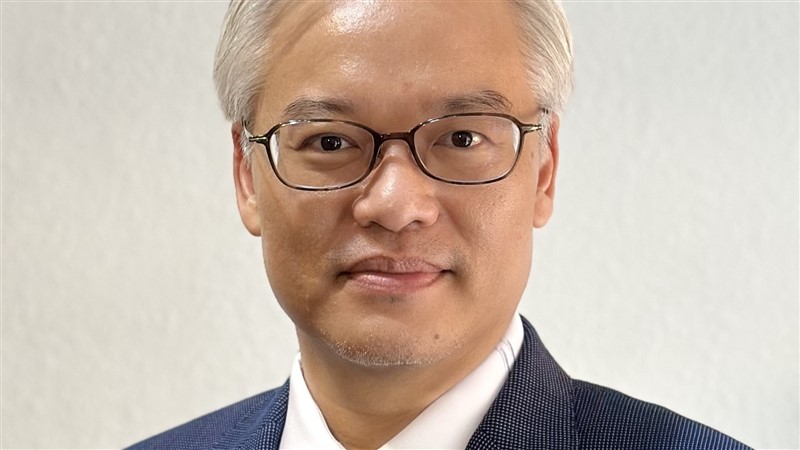
Artificial intelligence now lies at the heart of Taiwan. In a recent interview with Channel NewsAsia (CNA), NVIDIA founder and CEO Jensen Huang remarked that the word TAIWAN literally contains the letters "A" and "I" at its center. Meanwhile, according to the Directorate-General of Budget, Accounting and Statistics (DGBAS), Taiwan’s economy is projected to grow by 9.64% in 2026, driven primarily by robust global demand for AI hardware manufacturing, while stronger domestic consumption has also benefited from the wealth effect created by AI-fueled gains in the stock market. Earlier this June, my colleague Chia-Kuei Liu and I were on our way to National Taiwan University to chair the final presentations of a joint talent development program for the Asian Asset Management Center initiative. Along the way, he remarked that a small restaurant near TABF had become packed with visitors because Jensen Huang was once again in town. At that moment, another interpretation of TAIWAN came to mind: The AI World And Nvidia. From many perspectives, Taiwan's economy is undergoing a structural transformation driven by surging global demand for AI compute. Taiwan Semiconductor Manufacturing Company (TSMC) stands as the most representative example. Guided by its core values of integrity and honesty, TSMC has earned the trust of customers around the world. TSNC also identifies innovation as the fundamental driver of its growth. As stated on its corporate website: “Innovation is more than having new ideas. It requires execution and the courage to make change; otherwise, ideas remain mere imagination without value.” Similar values can be found across Taiwan. For example, the government’s Five Trusted Industry Sectors initiative seeks to position Taiwan as an indispensable and trusted partner within the global democratic technology ecosystem by developing semiconductors, AI, defense, security, and next-generation communications. Through such innovation, the initiative aims to stimulate industrial transformation, create high-quality employment, and strengthen national security and resilience. From this perspective, TAIWAN may also be read as Trust And Innovation We Are Nourished. The journey from earning customers’ trust to becoming a trusted global partner, from idea creation to effective execution, reflects the very DNA that has enabled Taiwan to establish itself across numerous industries, a defining expression of Taiwan’s spirit. Another equally important characteristic of that spirit is financial prudence, meanwhile. Both households and the public sector have traditionally maintained spending discipline, resulting in exceptionally high national savings. According to the International Monetary Fund’s World Economic Outlook (2026 edition), Taiwan’s gross national savings reached 46.78% of GDP in 2025, the highest ratio in the world, far exceeding the averages for the G7 economies (19.82%) and the global economy (26.11%). These abundant reserves provide a critical foundation for Taiwan's ambition to become Asia’s premier asset management center. Building upon this foundation, policymakers, financial institutions, and investors must jointly foster innovation, strengthen execution, and cultivate mutual trust to deliver comprehensive, internationally connected, and widely trusted financial services. Achieving this vision will represent yet another embodiment of the Taiwan spirit. One further aspect of the Taiwan spirit also continues to drive us forward: we hold ourselves to exceptionally high standards. Unless we have genuinely achieved global leadership – such as in semiconductor manufacturing – we often assume much remains to be learned from overseas experience. Accordingly, this issue of the Taiwan Banker features experts from Singapore, Hong Kong, and the UK, sharing international perspectives on turning Taiwan into an Asian asset management center. We also conducted a survey of domestic market participants; both groups identify talent as the single most critical factor for the long-term success of the initiative. In addition, the Management Strategy section includes articles examining the implications of the global minimum tax and the transparency risks associated with private credit. Both topics deserve careful consideration as the industry seeks to strengthen market confidence through prudent, forward-looking policy.