Banker's Digest
2026.02
The fan economy emerges as a new growth engine for cities
Wang Jia-Wei


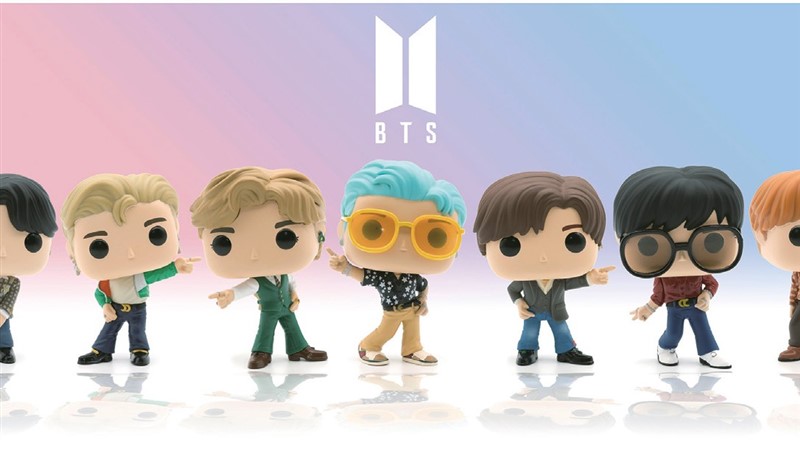
When BLACKPINK returned to Kaohsiung National Stadium for a second time in October 2025, all 110,000 tickets sold out in under three minutes – even as top-tier prices reached NT$8,800. This is not only the blockbuster popularity of a single Korean girl group, of course: last year, a record high number of Korean celebrity concerts and fan meetings were held in Taiwan, setting a new milestone in for the market. Nearly every show was packed, and getting tickets was no easier than securing a seat on Taiwan High Speed Rail during the Lunar New Year rush. If this seems like nothing more than a passing youth craze, think again: many venues were also filled with middle-aged fans and older. The appeal of the Korean Wave clearly spans generations. Where there are crowds, there is money. Once the crowds arrive, it is not only the event organizers who profit from ticket sales. Fans also come prepared to spend on official merchandise from light sticks, banners, fans, and photo cards to exclusive character dolls. In addition, many travel long distances, including from overseas, and also purchase food, accommodation, and transportation. In other words, concerts generate not only substantial box office revenue, but also drive merchandise sales and stimulate business in F&B, hospitality, and transport, forming a complete entertainment industry ecosystem. This is why the “fan economy” is increasingly being viewed as one of the next decade’s most promising blue ocean markets. The commercial opportunities created by the fan economy undoubtedly originate with the stars themselves – such as BLACKPINK, mentioned above. However, the global reach and enduring power of K-pop did not arise simply from a handful of idol groups, or a few hit songs, but is the result of long-term industrial development. The rise of the Korean Wave can generally be traced back to the mid-1990s, but the initial business model was not yet mature. It was only with the second generation that K-pop truly broke out of Korea and expanded into Japan and the broader Asian market. Super Junior, for example, debuted in 2005; their 20th anniversary concert at the Taipei Dome late last year drew large crowds of fans, now in their forties and fifties. It was the third generation, however, that propelled K-pop to its global peak. Groups such as BLACKPINK, BTS, and TWICE – which features Taiwan’s own Tzuyu – are familiar even to many who are not fans. Beginning with this generation, agencies have made extensive use of social media to interact with fans, while also introducing “universe” storytelling: the creation of virtual narratives and character settings, allowing artists to play specific roles and advance storylines across music, music videos, concept photos, and related media. These story worlds allow fans to build deeper emotional bonds with bands, increasing loyalty and engagement. K-pop therefore evolved from simply marketing music into selling a full-fledged intellectual property (IP) experience. This has since branched into two directions: one emphasizing technology, combining AI and virtual reality to create new interactive formats; and the other favoring simplicity, dispensing with elaborate world-building to instead focus on authentic emotion and atmosphere. The key to an idol group’s success has shifted from the early emphasis solely on the number of fans, to the depth of their engagement and loyalty. No longer content to just buy albums or attend concerts, fans find a sense of identity and an emotional outlet by participating in, entering, and interacting with the universe. Talent agencies have effectively upgraded idols from performing artists into fan IP, whose core value is derived from their attachment and cultural identification with their followers. As a result, fans subscribe to social platforms, purchase supporting merchandise, and even travel abroad. Some would rather live on nothing than miss a chance to see their idols, and are willing to pay far prices above market value. Whatever one may think of such intense behavior, the fan economy has generated enormous profits not only for talent agencies and related vendors, but also well beyond individual firms’ revenues and earnings. Its effects now extend to local tourism, employment, urban transformation, and city branding. Kaohsiung is the clearest example of these benefits. Long known for its heavy industry, the city has used concerts and large-scale entertainment events to reshape its image, injecting economic momentum into local F&B, hospitality, retail, and cultural & creative industries. According to government statistics, the city hosted 274 concerts in just the two-year period from 2023 to 2024, attracting 3.1 million attendees and generating more than NT$10 billion in output. In 2025 alone, it hosted more than 100 events, drew nearly 1.5 million attendees, and created over NT$4 billion in output. Not to be outdone, Taipei has leveraged its geographic advantages, infrastructure, and its status as the capital – including both the Taipei Arena and the Dome – to stage more than 400 concerts in 2025, attracting over 2 million attendees, and generating nearly NT$9.5 billion in tourism-related output. Today, the number of major concerts hosted has effectively become a new indicator of urban competitiveness, and the fan economy is a required field of study for local government leaders. Local governments no longer just collect venue rental fees, acting as landlords, but must find ways to attract top-tier performers and integrate events with regional tourism resources in order to drive local growth. As the fan economy reaches a certain scale, gaining momentum in more cities, its impact can rise to the level of the national macroeconomy. The best-known international example is Taylor Swift. According to DBS Bank estimates, her concert tour in Singapore in early March 2024 generated more than US$250 million in economic output for the city-state, equivalent to around 0.2% of its GDP in the first quarter of that year. The impact was so powerful that economists even coined the term “Swiftonomics” to describe the ability of such large-scale events to materially boost services output and economic growth. Because many fans would rather cut back on essential living expenses than reduce spending on their idols, the fan economy also has a degree of resilience during downturns, potentially serving as a buffer in periods of economic weakness. Beyond that, it also generates entertainment taxes, business taxes, and foreign exchange income from overseas fans, all of which can make a tangible contribution to a country’s economy. For financial institutions seeking to tap into opportunities in the fan economy, helping customers fulfill their aspirations as fans could be a viable point of entry. In fact, a number of domestic financial institutions have already experimented with partnerships involving IP owners or concert organizers – offering priority ticket access to certain credit cardholders, for example, or allowing card reward points to be redeemed for idol merchandise or used to subsidize ticket purchases, thereby improving customer acquisition and retention. Such offerings can even be incorporated into wealth management services, such as reserving exclusive VIP seating for high-net-worth clients in order to deepen premium client relationships. If cash flows from IP become more stable, meanwhile, revenue streams such as concert ticket sales and platform subscriptions can even be securitized into tradable capital market products. Insurers may also consider event interruption insurance to cover cancellations caused by natural disasters, pandemics, artist illness or injury, or political controversy. That said, despite its growing popularity, the underlying risks of the fan economy should not be overlooked. Because it depends heavily on the connection between fans and a single IP, in case that bond weakens, related consumption could fall to zero almost overnight. In K-pop, for instance, male celebrities who evade the draft see their entertainment careers come to an effective end. Thus, even a global phenomenon like BTS faced a period of uncertainty at the height of its popularity due to military service obligations. Scandals or moral controversies can be even more damaging, triggering waves of fans withdrawing support or switching allegiance, leaving the IP with little or no residual value. National policy can also disrupt the fan economy. Chinese restrictions on Korean entertainment since 2016 are a prime example, although recent reports have suggested the possibility of a full normalization. Risk diversification is therefore essential for financial institutions, or for any other party seeking to cultivate the fan economy. Resources should be diversified across IP sets. In K-pop, for example, each generation tends to turn over roughly every five years, so portfolio allocation should be distributed accordingly. Moreover, opportunities in the fan economy are by no means limited to K-pop. One should not overlook nearby Japan. Unlike Korea, which centers its strategy on idol groups, Japan possesses one of the richest global IP reservoirs in animation and gaming. From the earlier Dragon Ball to the more recent Demon Slayer, Japan has long demonstrated its extraordinary global influence. Taiwan need not underestimate itself either. Baseball, for instance, is one of the strongest domestic vehicles for the fan economy. With the World Baseball Classic set to begin in March, another surge of enthusiasm is likely. As for local entertainers, A-Lin, who delivered not only powerhouse vocals, but also a stream of humorous one-liners at Taitung’s 2026 New Year’s Eve event was dubbed by netizens as the “traffic queen of 2026,” and could well be shaped into a fan IP with distinctive Taiwanese local character. The author is Chief Research Fellow of the Financial Research Institute, TABF.