Banker's Digest
2025.12
Chairman Peng Jin-Lung on “the financial sector giving back”
Joy Kuo


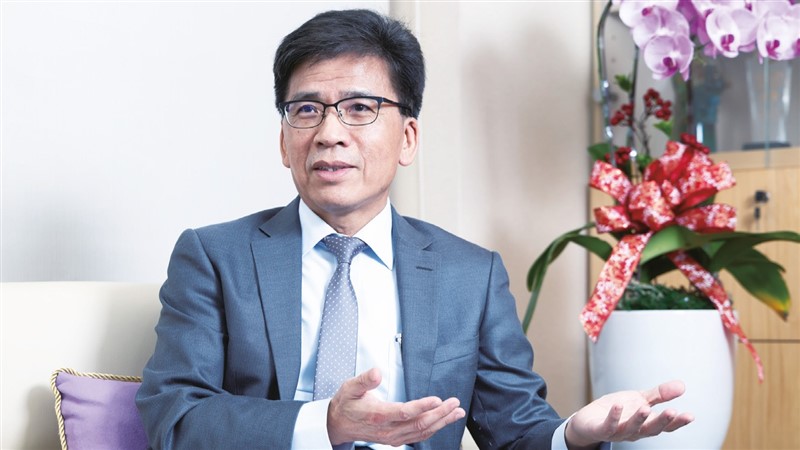
Trust has become a critical foundation for the long-term development of the financial sector in an era of increasingly intense global financial competition. Since the beginning of this year, Peng Jin-lung, Chairman of the Financial Supervisory Commission (FSC), has advocated the concept of “the Financial Sector Giving Back,” encouraging financial institutions to strengthen social trust through concrete actions. As social trust deepens, the government gains greater confidence to adopt more open financial policies, further expanding and strengthening financial markets, and thereby creating a virtuous cycle. This initiative will be promoted in three phases: advocacy, disclosure, and evaluation. Starting in 2026, financial institutions may voluntarily disclose their giving-back initiatives, gaining social recognition while also encouraging peer institutions to follow best practices. Taiwan is advancing financial internationalization and capital market development, striving to become a key Asian asset management hub. As financial markets around the world accelerate their opening, countries are actively optimizing their financial environments to attract international financial institutions and capital inflows, stimulating local economic growth and industry. In an interview with the Taiwan Banker, Peng noted that while the government is driving the transformation and expansion of financial markets, it also bears responsibility for national economic growth and job creation to provide hope for younger generations. At a deeper level, these efforts aim to diversify national risk and strengthen economic resilience. Unlike industries which produce tangible goods, the financial sector delivers intangible value: professional expertise and commitments. At the heart of each financial transaction lies trust. When depositing funds, for example, customers place their money with their bank and receive only a passbook or account credentials in return – an apparent imbalance in value which nevertheless functions smoothly precisely due to trust. “Giving back” represents a strategic approach to building trust capital within the financial sector. When customers trust that financial institutions act with empathy, prioritize client needs over short-term profit, and are willing to contribute to shared social well-being, they naturally gravitate toward long-term partnerships with such institutions. New and existing customers alike accept new products and services, supporting the stable development of financial markets. Conversely, when social trust in finance is weak, customers become overly cautious, disputes increase, and conflicts persist, ultimately damaging the industry’s image. In such circumstances, regulators inevitably lean toward regulatory tightening to protect consumers and maintain market order, rather than market opening. Peng emphasized that finance operates as a licensed industry. Its results are not solely attributable to experience, capability, or competitive advantage, but rather from government authorization, which represents an inherent social mandate and sense of public responsibility. While giving back is not a statutory obligation, it is intended to help institutions build long-term trust under the principle of “from society, for society.” Accordingly, banks should not regard it as an additional burden, but should integrate it into their overall business strategy. The beneficiaries should extend beyond shareholders to include operational employees, disadvantaged customers, and society at large. This initiative aims to establish a guidance-oriented policy framework. To ensure that financial institutions truly integrate and internalize this concept as a core business strategy, the FSC will roll the initiative out through progressive advocacy, disclosure, and evaluation. Peng stressed that the FSC’s approach is voluntary. In addition to requiring transparent information disclosure, it will also provide incentives to drive growth and innovation, such as allowing more diverse and attractive financial products. Institutions are also encouraged to develop distinctive mechanisms to give back and enhance service quality. During the advocacy phase, the focus will be on policy communication and building social consensus. When applying for new business licenses, institutions will be encouraged to proactively consider how profits can be returned to society, for example, through talent development or social welfare initiatives. The disclosure phase, launching in 2026, will require administrative measures by financial institutions to establish a “Giving Back” section in their annual reports, sustainability reports, or websites, disclosing concrete actions and outcomes. Transparency will prompt institutions to review and strengthen their initiatives, inspire peer learning, and establish benchmarks. Over time, this will enhance the scale and social reach of their efforts. In the evaluation phase, accumulated experience and results will be used to develop assessment standards. Initially, participation will be encouraged to foster healthy competition and continuous improvement. While there will be no penalties, the results will place pressure on underperforming institutions to improve, ultimately leading the entire industry into a virtuous cycle. Taiwan’s financial sector has long been active in public interest activities, such as donations, beach clean-ups, and material contributions; popular clean-up events are often oversubscribed. The concept of “the Financial Sector Giving Back” seeks to move beyond standardized approaches and encourage distinctiveness and innovation. The FSC has proposed four key action guidelines for this initiative: Financial education and literacy enhancement Financial education and literacy are essential to consumer rights, quality of life, assets, and market stability. Continued public-private collaboration will help create a financial learning environment conducive to financial inclusion. Support for local communities and vulnerable groups Support for local communities and vulnerable groups helps narrow urban-rural financial gaps. Financial institutions can promote financial equity and balanced regional development by fostering inclusive organizational cultures, offering accessible services, and establishing branches in underserved areas. Green finance and sustainable development In response to climate change, international sustainability organizations advocate transition finance. The FSC is actively promoting green and transition finance to channel private capital into sustainable infrastructure, R&D on low-carbon technology, ESG enhancement, and management of emerging risks. Green finance not only protects the environment, but also represents a key pathway for the financial sector to fulfill its social responsibility and create value. Fulfillment of corporate social responsibility Ultimately, corporate social responsibility must be embedded in operations. Finance is not merely about managing numbers—it is about managing trust. When institutions internalize giving back as a business strategy, they enhance social well-being, strengthen brand value, and generate broader societal benefits. When companies view giving back as a long-term investment, they become more proactive and sincere in safeguarding trust with shareholders, customers, and society. Conversely, superficial or insincere efforts are less likely to resonate. The financial sector must develop distinctive approaches to move from charity to strategy. With abundant resources and professional talent, institutions should leverage their expertise to generate meaningful impact. If a particular holding company becomes synonymous with deep expertise in a specific field, society naturally turns to it in times of need. Such trust not only strengthens branding, but also enhances organizational resilience. Giving back should reflect sincerity and be undertaken within one’s means; it should not be measured solely by monetary comparison. For example, during the overflow of the Mata’an River barrier lake in Guangfu Township, Hualien, in September 2025, a local noodle shop owner personally cooked meals for volunteers and victims. While financially equivalent to paid catering, his action demonstrated warmth, immediacy, and commitment within manageable costs, highlighting that relevance and capacity matter more than scale. Giving back transcends organizational size. Large enterprises can demonstrate strong ESG integration and influence, while small and medium-sized enterprises can develop their own sustainability models. The same applies to financial institutions: large institutions should meet higher standards, while smaller, community-based credit cooperatives possess deep local ties and century-long histories which can generate irreplaceable social value, despite their limited scale. Giving back can be aligned with an institution’s strengths and developed into a systematic, goal-oriented, long-term strategy. Institutions with branches across Taiwan who act with intention take on roles traditionally filled by government, expanding the foundation of social trust. For example, some state-owned banks have long invested in sports, supporting grassroots development, forming teams, assisting athletes’ careers, and offering post-retirement opportunities as bank employees or coaches. Institutions may also develop niche products others avoid, cultivate volunteer cultures, or encourage employee engagement in social service, building trust and achieving long-term impact through organizational culture and mindset. Peng concluded that in the digital era, the distance between financial institutions and customers is no longer geographic, but psychological: the distance of trust. The greater the degree trust society bestows in a bank, the broader its future in financial markets. Giving back is not merely social goodwill, but a necessary strategic choice for the future of the sector. Early action and transformation can significantly reduce costs and greatly increase the likelihood of success. Policy need not be cold regulation. When goodwill is translated into action, it becomes a warm and powerful force. Financial-market growth cannot be achieved through advertising alone; only when goodwill takes root and trust flourishes can stability and growth advance together within Taiwan’s financial ecosystem. The Author is Deputy Editor-in-Chief of the Taiwan Banker.